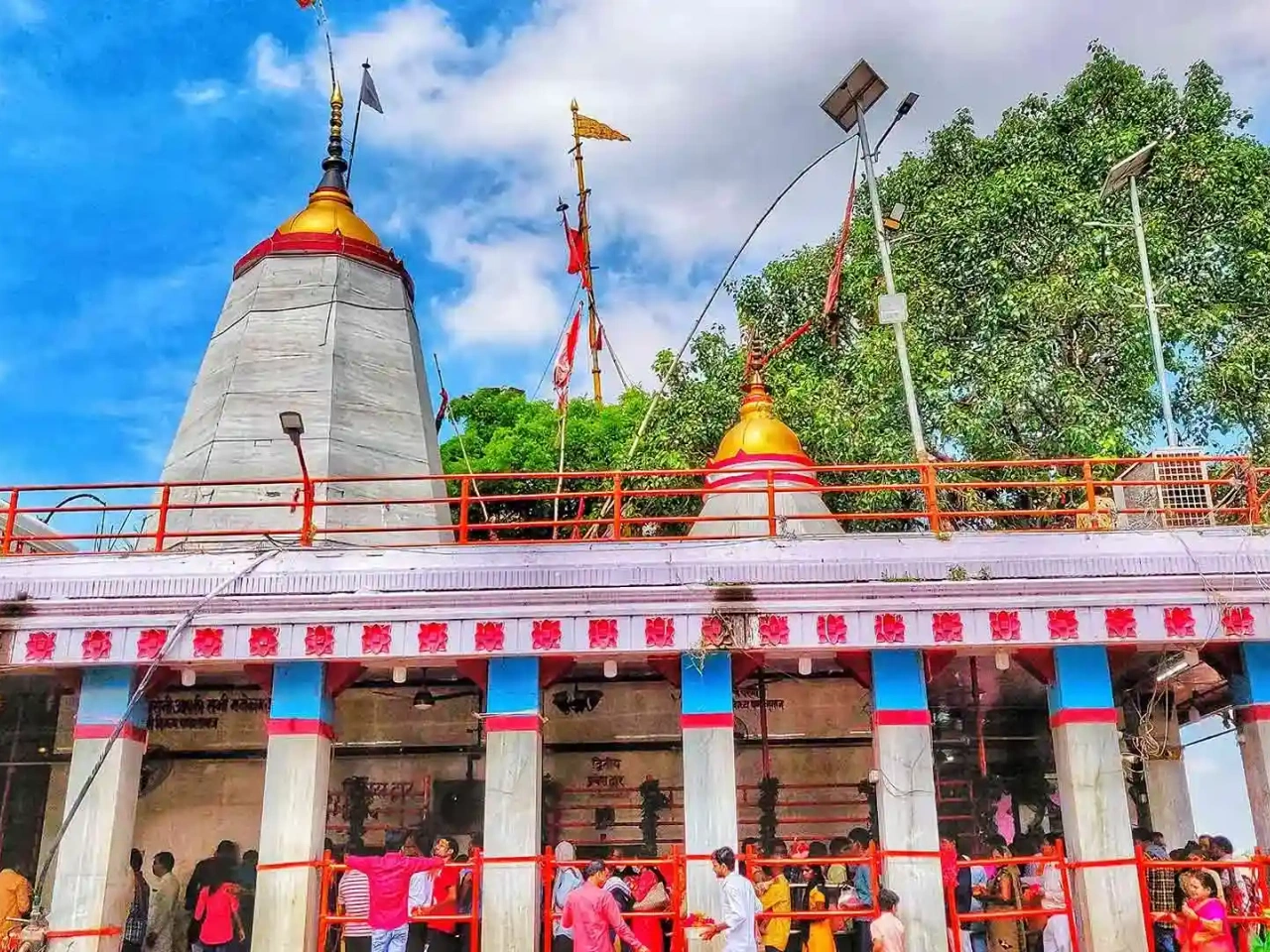
Nestled on the banks of the sacred River Ganga in the Mirzapur district of Uttar Pradesh, Vindhyachal is one of India's most revered pilgrimage destinations. Uniquely positioned between the two ancient holy cities of Prayagraj (Allahabad) and Kashi (Varanasi), this temple town holds a distinction no other Shakti Peeth can claim — all three forms of Goddess Durga, namely Maa Lakshmi, Maa Kali, and Maa Saraswati, have individual temples consecrated here within a single sacred triangle.
Whether you are a devout pilgrim seeking blessings, a history enthusiast drawn to ancient mythology, or a curious traveller looking for authentic India, the places to visit in Vindhyachal offer an experience that stays with you long after you return home. Explore the complete Vindhyachal guide on SyncTrip.
🔱 What is the Trikon Parikrama?
The Trikon Parikrama (Sacred Triangle Circuit) is the defining pilgrimage of Vindhyachal. Devotees complete a triangular route connecting three powerful temples, each representing a distinct form of the Divine Mother. The full circuit spans approximately 5 km and takes 2–3 hours on foot. It is considered incomplete if any of the three temples is skipped. The route traditionally flows from Maa Vindhyavasini Temple → Kali Khoh Temple → Ashtabhuja Temple.
6 Best Places to Visit in Vindhyachal
01. Maa Vindhyavasini Temple
The beating heart of Vindhyachal, the Maa Vindhyavasini Temple is the primary reason lakhs of pilgrims travel here every year. The presiding deity — Goddess Vindhyavasini, a form of Maa Durga — is enshrined in a small inner sanctum (Garbhgrah) as a black idol adorned with silver eyes and gold jewellery, radiating an energy that devotees describe as immediately humbling.
Mythologically, this is believed to be the spot where the back of Goddess Sati fell after her self-immolation, marking it as one of the holiest Shakti Peethas in all of India. Pilgrims typically begin the Trikon Parikrama here — offering a chunari (red scarf) to the Goddess, taking a holy dip in the Ganga, and attending the mesmerising morning or evening aarti.
- Arrive before 5:00 AM for a peaceful darshan — queue times are 20–30 min versus 1–2 hours during peak hours (10 AM–4 PM).
- During Navratri, late-night parikrama (10 PM–3 AM) offers a transcendent, less-crowded experience.
- Carry a red chunari and coconut for traditional offerings; security check is mandatory.
02. Kali Khoh Temple
Set deep within a natural cave carved into the Vindhya hillside, the Kali Khoh Temple is dedicated to Maa Mahakali — the fierce destroyer of evil. The word "Khoh" means cave, and this dimly lit, incense-filled sanctuary holds an intensity quite unlike any open-air temple. Goddess Kali is believed to reside here permanently, having manifested to annihilate the demon Raktabeej.
The cave interior is adorned with ancient rock carvings and paintings, and the cool, echoing space creates a deeply meditative atmosphere. Devotees seeking protection from fear, negative energies, and obstacles make this a particularly important stop.
- The cave stays naturally cool — keep a light shawl handy for the interior.
- Photography may be restricted inside the sanctum; always ask before raising your camera.
- This is the second stop of the Trikon Parikrama, located roughly 2–3 km from the main Vindhyavasini Temple.
03. Ashtabhuja Devi Temple
Perched atop a hillock about 8 km from Vindhyachal town, the Ashtabhuja Temple is dedicated to Goddess Ashtabhuja — the eight-armed form of Maa Saraswati. The ascent through the hillside offers sweeping panoramic views of the Vindhya ranges and the river valley below, making this the most visually rewarding stop of the Trikon Parikrama.
Mythologically, Ashtabhuja is believed to be an incarnation of the divine sister of Lord Krishna who took birth in Gokul before mysteriously ascending into the Vindhya mountains. The temple is particularly significant for students, scholars, and those seeking wisdom and prosperity.
- Monkeys are prevalent near this temple — keep food, bags, and shiny objects secured.
- The sunrise view from the hilltop is extraordinary; arrive early if you can.
- A ropeway is available for those who prefer not to climb — particularly helpful during Navratri when the steps become extremely crowded.
04. Sita Kund
One of the most emotionally resonant places in Vindhyachal, Sita Kund is a sacred water body directly connected to the Ramayana. According to legend, while returning from 14 years of exile, Goddess Sita grew thirsty on this very spot. Lord Lakshmana, finding no water source nearby, shot an arrow into the ground — and from that point a spring of fresh water burst forth, forming the kund (pond) that exists to this day.
Devotees climb 48 steps to reach the kund, and the climb itself is considered an act of faith. The panoramic view of the surrounding landscape from the top adds a scenic reward to the spiritual one.
- The 48-step climb is manageable for most visitors; comfortable footwear is advised.
- Best visited in the cooler morning hours for a peaceful experience.
- Combine this with a visit to the nearby Rameshwar Mahadev Temple where Lord Rama is said to have installed a Shivalinga.
05. Ram Gaya Ghat
Situated approximately 2 km from the main Vindhyachal temple complex, Ram Gaya Ghat — also known as "Chhoti Gaya" — is one of the most sacred riverine spots in eastern Uttar Pradesh. According to legend, Lord Rama and Goddess Sita performed tarpan (water libations) for their ancestors here during their exile years.
Today, the ghat is a major centre for Pind Daan (ancestral funeral rites) during Pitru Paksha. Thousands of families travel specifically to Ram Gaya Ghat for this sacred purpose. In the evenings, the ghat hosts a beautiful Ganga Aarti, with oil lamps reflecting on the Ganga's surface — one of the most peaceful moments you can witness in Vindhyachal.
- The evening Ganga Aarti is a must-witness event — arrive 20–30 minutes early to secure a good spot.
- Peaceful boat rides on the Ganga are available from this ghat.
- During Pitru Paksha (September), the ghat draws enormous crowds; plan with extra time.
06. Kankali Devi Temple
The Kankali Devi Temple derives its name from two words — "Kankal" (skeleton) and "Kali" — reflecting a fierce mythological event in which Maa Durga, provoked by the demonic army, transformed into Maa Kali and destroyed them, holding their severed heads. This small but intensely powerful shrine is considered especially protective, and pilgrims completing the Trikon Parikrama often include it as a closing blessing.
The temple is located close to the Vindhyavasini Temple and is a compact, deeply atmospheric space where devotion is viscerally felt. Those seeking blessings for health, safety, and protection from obstacles regularly make this a dedicated visit.
- This temple is often quieter than the main Vindhyavasini Temple — a good place for personal prayer and meditation.
- Best combined with your Trikon Parikrama as an additional stop near the main temple.
"Vindhyachal is the only place in India where all three forms of the Goddess — Lakshmi, Kali, and Saraswati — have individual temples consecrated at a single location, forming a sacred triangle of divine energy."
Quick Reference: Vindhyachal Travel Essentials
| Detail | Information |
|---|---|
| Location | Mirzapur District, Uttar Pradesh, India |
| Best Time to Visit | October – March (cool weather); Navratri (Sept–Oct, Mar–Apr) for festivals |
| Distance from Varanasi | ~65–70 km (1.5–2 hrs by taxi or bus) |
| Distance from Mirzapur | ~8 km |
| Nearest Airport | Lal Bahadur Shastri Airport, Varanasi (~68 km) |
| Trikon Parikrama Duration | 2–3 hrs on foot; 1 hr by vehicle |
| Temple Darshan Hours | 5:00 AM – 10:00 PM (extended during Navratri) |
| Best Darshan Time | 4:00 AM – 6:00 AM (minimal queue, most serene) |
Beyond the Sacred Six: More to Explore
Vindhyachal's spiritual geography extends beyond its six headline attractions. Sankat Mochan Hanuman Temple, located near the Vindhyavasini Temple, is dedicated to Lord Hanuman in his youthful form. Known locally as Bandhwa Hanuman, this temple is believed to dissolve obstacles and grant relief from troubles — Tuesdays see especially devoted crowds.
Nature lovers should venture further into the Mirzapur region to experience the Tanda Falls and Lakhaniya Dari — a spectacular waterfall cascading from 150 metres that also offers trekking opportunities. The nearby Agori Fort, built by the Kharwar and Chandel dynasties, and the historically rich Chunar Fort round out the experience for those with a taste for Uttar Pradesh's deeper past.
Vindhyachal During Navratri — When the Town Comes Alive
If there is a single time of year when Vindhyachal transcends the ordinary, it is during Navratri — both Chaitra Navratri (March–April) and Sharad Navratri (September–October). The town transforms into a 24-hour celebration of the divine feminine. Millions of devotees arrive from across India, chants fill the air night and day, and the temple complex glows with lamps and marigolds.
The 8th and 9th days of Navratri (Ashtami and Navami) draw the heaviest crowds. For a more manageable experience, visit in the first three or last two days of the festival. Late-night parikrama between 10 PM and 3 AM during Navratri is considered especially auspicious — crowds are thinner and the spiritual intensity is described by pilgrims as "electric."